
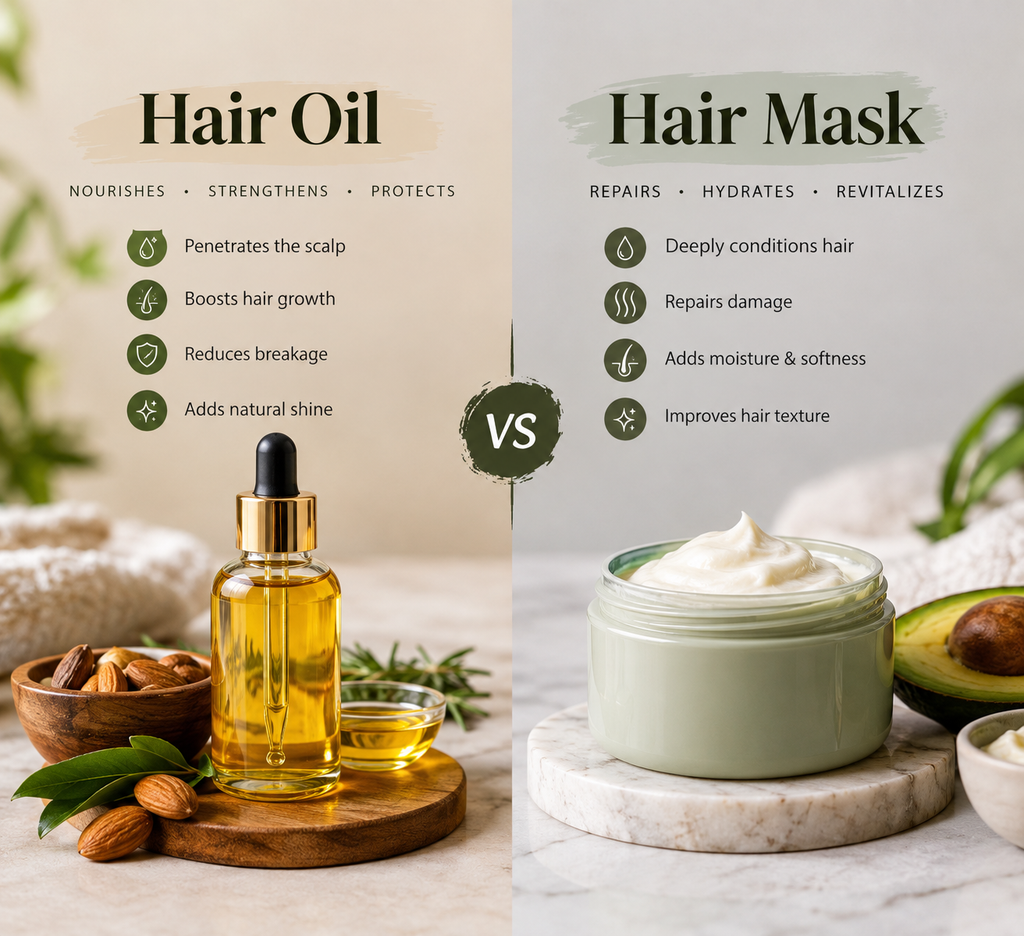
If you’ve ever stood in the hair-care aisle wondering whether to grab a bottle of oil or a tub of mask, you’re not alone. Both promise to repair, hydrate, and transform your strands—but they work in very different ways. Hair oils are lipid-based sealants that lock in moisture and add shine, while hair masks are intensive treatments designed to penetrate the shaft with proteins, humectants, or bond-repairing ingredients. Neither is universally “better”—the right choice depends on your hair’s current needs, texture, and damage level.
In this guide, we’ll break down exactly how hair oil and hair mask differ, explore the downsides of overusing masks, reveal the best oils to use as a DIY mask, clarify whether you should apply mask or oil first, and answer your most frequently asked questions. By the end, you’ll know exactly which product to reach for—and when.
-Key Differences
Before diving into pros and cons, it helps to understand what each product actually does:
Hair Oil:
- Function: Seals the cuticle, locks in moisture, adds shine, reduces frizz.
- Ingredients: Plant-based oils (coconut, argan, jojoba, olive, etc.).
- Best for: Daily maintenance, heat protection, finishing, lightweight hydration.
- How it works: Oils sit on top of the hair shaft, creating a protective barrier that prevents moisture loss and environmental damage.
- Hair Mask:
- Function: Deeply conditions, repairs damage, restores protein-moisture balance.
- Ingredients: Proteins (keratin, collagen), humectants (glycerin, honey), emollients (butters, silicones), bond-repair actives.
- Best for: Weekly or biweekly intensive repair, post-color treatment, severe dryness or breakage.
- How it works: Masks penetrate the hair shaft (especially when heat is applied) to deliver active ingredients that rebuild structure and hydration.
- Which works best?
- For daily hydration and shine: Hair oil wins.
- For deep repair and damage reversal: Hair mask wins.
- For most people: You need both—but used at different times and for different purposes.
- What Are the Downsides of Using a Hair Mask?
Hair masks are powerful—but they’re not meant for daily use. Overusing them (or using the wrong type for your hair) can lead to several issues:
1.Protein overload
Many masks contain hydrolyzed proteins (keratin, wheat, soy) that strengthen damaged hair—but too much protein makes hair stiff, brittle, and prone to snapping. Signs include:
Straw-like texture
- Increased breakage
- Loss of elasticity (hair snaps instead of stretching).
Fix: Limit protein masks to once every 2–4 weeks. Follow with a moisturizing conditioner.
2. Moisture Overload
Hydrating masks with heavy humectants (glycerin, honey) or emollients (butters, silicones) can make hair feel mushy, limp, or greasy if used too often. Signs include:
Hair feels overly soft but weak
- Curls lose definition
- Scalp feels oily or weighed down
- Fix: Alternate with clarifying shampoos. Use hydrating masks no more than 1–2 times per week.
- 3. Buildup and Dullness

Silicones, waxes, and heavy butters in some masks can accumulate on the hair shaft, blocking moisture and making hair look dull or feel sticky. This is especially common with rinse-out masks that aren’t fully washed out.
Fix: Clarify monthly with an apple cider vinegar rinse or sulfate-free clarifying shampoo.
4. Scalp Irritation
Applying mask too close to the scalp (especially protein-heavy or fragranced formulas) can cause itching, flaking, or clogged follicles.
Fix: Apply masks from mid-lengths to ends only. Avoid leaving on longer than recommended (usually 5–20 minutes).
5. Dependency Cycle
Relying on masks too frequently can make hair “dependent” on external proteins or moisture, weakening its natural structure over time. Hair may feel worse without constant masking—a sign you’re over-treating.
Fix: Use masks strategically (post-color, post-heat damage, seasonal dryness), not as a daily crutch.
Bottom line: Hair masks are repair tools, not maintenance products. Use them 1–2 times per week max, and always follow with a lightweight conditioner to balance.
What Is the Best Oil to Use as a Hair Mask?
You don’t need a store-bought mask to deep-condition—certain oils work beautifully as DIY treatments when warmed and left on for 30+ minutes. The “best” oil depends on your hair type and goals:
1. Coconut Oil (Best for High-Porosity, Thick, or Damaged Hair)
- Why it works: Penetrates the hair shaft due to small molecular size, reduces protein loss, adds intense moisture.
- How to use: Warm 2–3 tablespoons, apply from roots to ends, cover with a shower cap, leave 30–60 minutes (or overnight), then shampoo out.
- Caution: Can be too heavy for fine or low-porosity hair—may cause buildup.
- 2. Olive Oil (Best for Dry, Coarse, or Color-Treated Hair)
- Why it works: Rich in oleic acid and antioxidants, seals cuticle, adds shine, softens rough texture.
- How to use: Mix with honey (humectant) for extra hydration. Apply warm, leave 20–30 minutes, rinse thoroughly.
- Caution: Heavy—use sparingly on fine hair.
3. Argan Oil (Best for Frizz Control and Daily Maintenance)
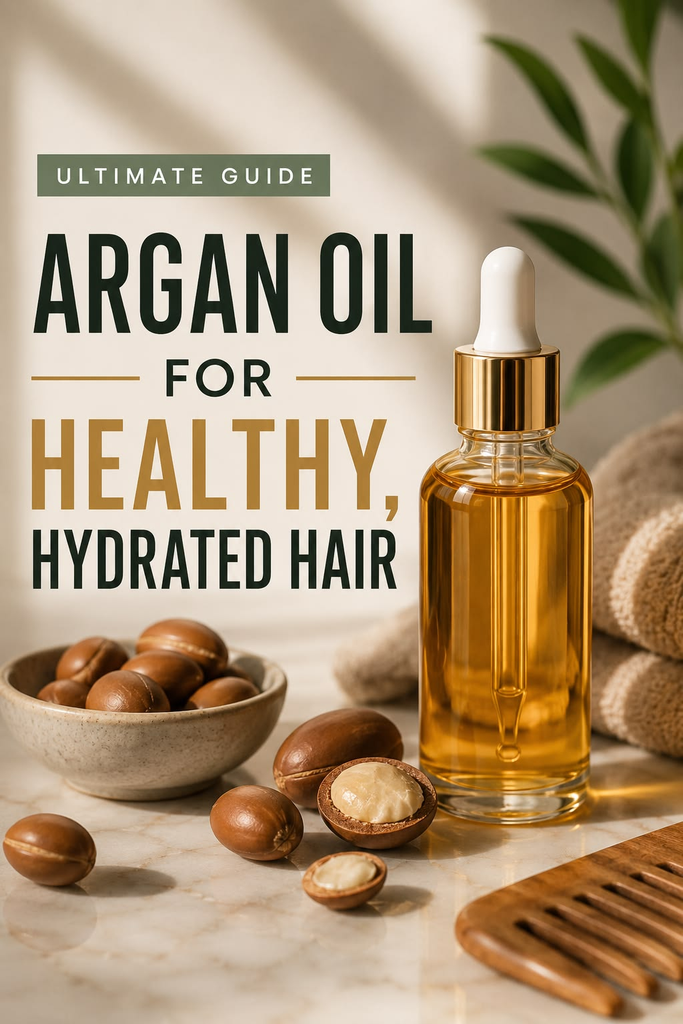
- Why it works: Lightweight, non-greasy, rich in vitamin E and fatty acids, tames frizz without weighing hair down.
- How to use: Use as a pre-wash treatment (30 minutes) or as a leave-in on damp ends.
- Caution: Less penetrating than coconut—better for sealing than deep repair.
- 4. Jojoba Oil (Best for Scalp Health and Fine Hair)

- Why it works: Mimics scalp’s natural sebum, balances oil production, lightweight enough for daily use.
- How to use: Massage into scalp, work through ends, leave 20–30 minutes, shampoo out.
- Caution: Not as reparative as coconut or olive—better for maintenance.
- 5. Castor Oil (Best for Growth and Thickness—Use Diluted)

- Why it works: Thick, viscous oil rich in ricinoleic acid, believed to stimulate circulation and thickness.
- How to use: Mix 1 part castor oil with 2 parts lighter oil (coconut or jojoba). Apply to scalp and ends, leave 30 minutes, shampoo twice to remove.
- Caution: Very heavy—can cause buildup if not washed out thoroughly.
- Pro tip: For maximum penetration, apply oil to damp (not soaking wet) hair, cover with a warm towel or shower cap, and use gentle heat (hooded dryer or warm towel) for 15–20 minutes.
- Should I Put Hair Mask or Hair Oil First?
This is a common point of confusion—and the answer depends on your goal:
If You’re Using a Rinse-Out Mask + Oil as Pre-Treatment:
Order: Oil first → Mask second
- Apply warm oil to dry or damp hair 30–60 minutes before washing.
- Shampoo out oil, then apply mask to clean, towel-dried hair.
- Leave mask on 5–20 minutes, rinse, condition, style.
Why: Oil pre-treatment protects hair from shampoo stripping, while mask delivers actives to clean, receptive strands.
If You’re Using a Leave-In Mask + Oil as Sealer:
Order: Mask first → Oil second
- Apply rinse-out or leave-in mask to clean, damp hair.
- Rinse (if rinse-out), then apply a few drops of oil to ends or all over to seal.
- Why: Mask hydrates/repairs, oil locks it in and adds shine.
If You’re Doing an Oil-Only “Mask” (DIY Treatment):
Order: Oil only → Shampoo → Condition
- Skip the mask entirely—use warm oil as your deep treatment.
- Shampoo out thoroughly, condition ends, style as usual.
Why: Oils like coconut or olive provide enough penetration and moisture on their own for many hair types.
General rule: Always apply products from thinnest to thickest consistency, and from most penetrating to most sealing. Water-based leave-ins → creams → oils → butters.
Frequently Asked Questions (FAQs)